-
Banjaras: Links and visits to ancient Israel
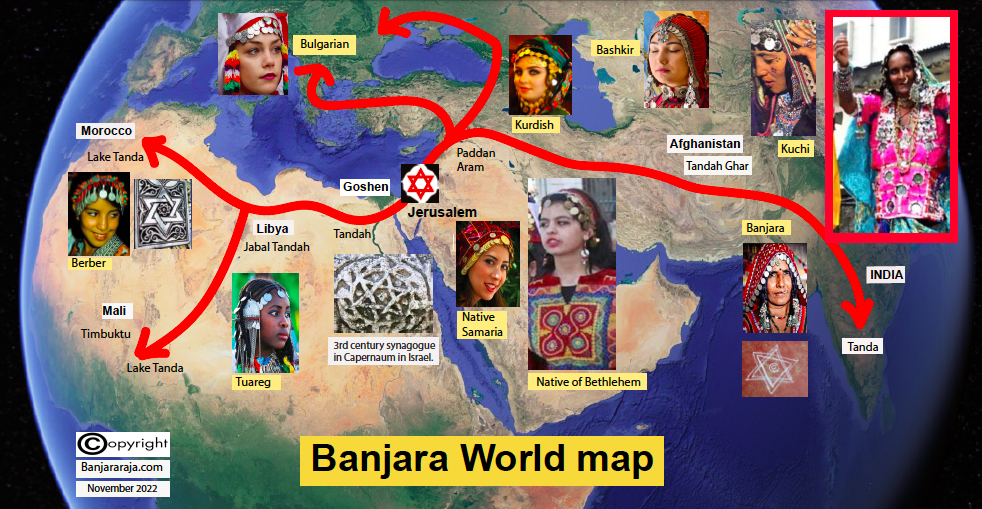
The Banjara tribe in India were nomadic long distance transporters. Their carevans could be 35-40 kilometers long, and have 100.000 bulls and bullocks. A comparative study of their females dress code, their DNA and use of judaic symbols, display a Middle Eastern origin and links to the ancient Israel and the Davidic kingdom. The Gormati (Lambadi) word “Tanda” in one of the keys to understand their trading routs, or Lamani margs. Tanda means camp, and they can be found at the edge of the Atlantic Coast in Marocco, just south of Timbuktu in Mali and along the Nile river in Egypt.
-
Alexander the Great terminated Gor´s Tanda business in 327-326 B.C
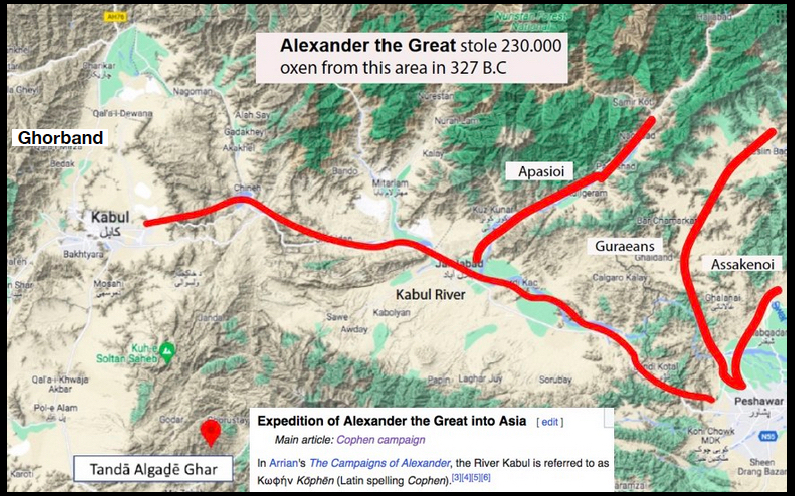
The Greek general stole 230.000 oxen in the Himalayas. And forced the tribals to help them to take them to Macedonia.
PDF will be made available for purchase.
Visit: https://exodussouth.com/
-
Tribal history according to Gor Banjara females
Its a great privilege to honor Gor Banjara females. They have preserved the ancient history of their people. I hope educated members of this tribal community will explain this glorious past to their mothers and sisters. And that my beloved people shall face a restoration. I pray they also shall be granted compensation for the horrible crimes committed against them by the British Criminal tribes Act.
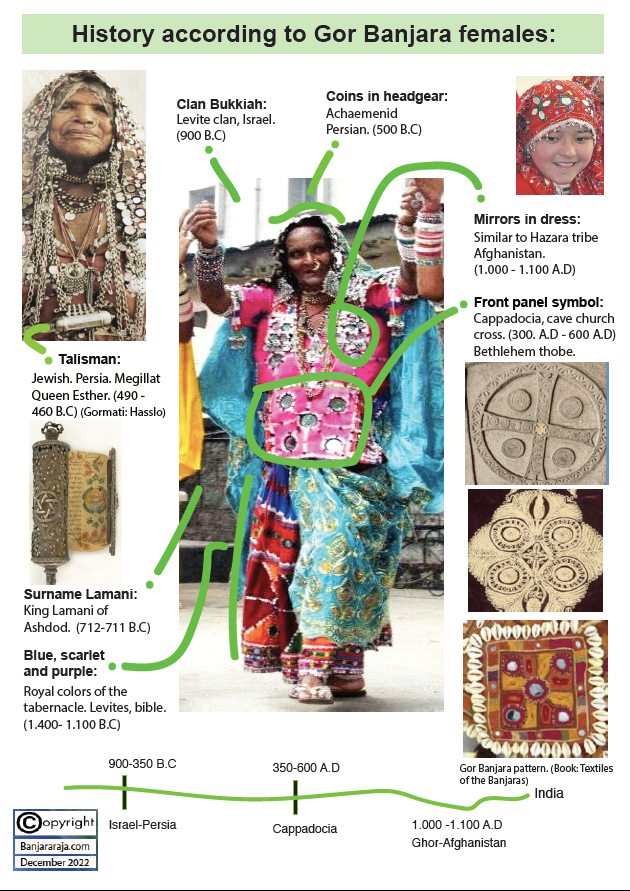
Download for free a large PDF (7,3 MB) of this chart, Illustration:
-
Levite Bukkiah match Gor Banjara clan
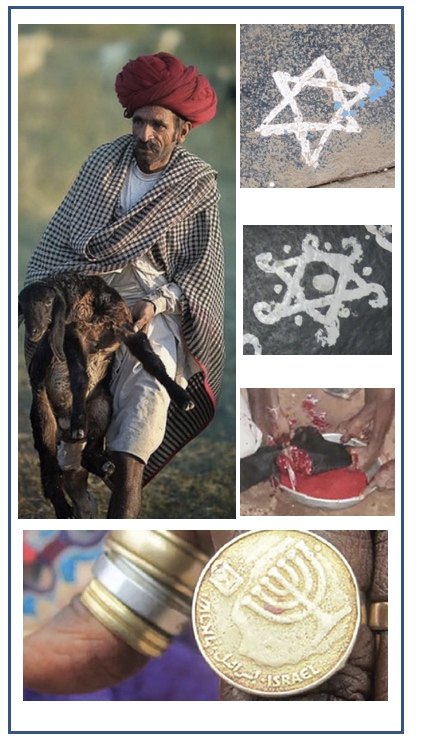
The biblical figure Bukkiah match the name of a large clan of the Gor Banjara tribe. If you do not see the big picture, simply another very strange coincidence? The Bible explains that Bukkiah was a temple musician from the Israeli tribe of Levi serving in king Solomons Temple in Jerusalem: 1 Chronicles 25:4 As for Heman, from his sons: Bukkiah, Mattaniah, Uzziel, Shubael and Jerimoth; Hananiah, Hanani, Eliathah, Giddalti and Romamti-Ezer; Joshbekashah, Mallothi, Hothir and Mahazioth. (…) Bukkiah is the great grand son of the prophet Samuel. When the Gor Banjara community acknowledge their biblical identity, this tribe will be able to preserve their Middle Eastern nomadic fingerprints. Unfortunately their unique dress code, patterns, symbols and rituals are fading away quickly in the 21st century.

-
The Tuareg tribe in Niger and their Tandas
Without applying Anthropology, it is close to impossible to decode the origin of Gor Banjaras. They did exist thousands of years ago, regardless if Archaeology can not be used to find any of their structures. And classical historians can not find any written source to examine. Nomadic tribes hideouts and whereabouts can be determined by a cross-culture examination of jewellery, patterns, rituals, DNA, particular words and origin of symbols, etc. The Banjara community and the Tuareg’s in central Africa live thousands of kilometers apart. But their crossroads can be rediscovered by applying DNA-science. The Tuareg tribe in Niger and Gor Banjaras share a high number of the Celtic DNA code of R1b. That code (R-V88) was discovered in the bones of three Pharaoh’s who lived ca. 1.500 B.C in Egypt. The age of the Biblical Exodus seems to be the time when Celts, Tuareg and the Banjara people traveled in different directions. In my next article you will be introduced to three Tandas in Niger, in the Tuareg’s heartland.

-
Tanda from Paddan Aram to Morocco
To understand the origin of the word “Tanda” in Gormati is one of the keys to understand the origin of the Gor Banjara tribe. While the origin of the Banjaras is a disputed mystery, the migration patterns of the Berbers are more commonly known. Their shared use of the word “Tanda” fits perfect in the huge puzzle. Ancient Egypt is the center of a migration to both the extreme West and East. The Berbers migration westwards in the 11th century might have had many objectives. One of them was to escape the brutality of the rapidly expanding Islamic Caliphates. It is common knowledge that the Banjara tribe entered India in and around the same century as the Berbers completed their migration to the mountain hideouts at the extreme edges of the North Atlantic Ocean.

-
Tandas in the Himalaya and Afghan mountains
As you enter Pakistan from Indian Kashmir, there is a village named Tanda. This village town is located in the Khyber Pakhtunkhwa province, where you find the famous Khyber pass. Located ca 200 kilometers west of Tanda. In the mountains above Tanda, there is a local pass named Tanda Gali. The village Tanda is located 3.400 feet above sea level. This pass is part of the ancient regional highway down from Afghanistan to India. A part of the famous Silk Road. Every Banjara in India use the name «Tanda» for camp, (village). As you enter Afghanistan, you find the mountain Tanda Algade Ghar. Just south of Kabul. A perfect summer camp for pastoral tribes. Further westwards, you find Tandah Ghar montain, south East of the city of Kandahar. Interestingly, just above a vilage named after an Mughal emperor.

-
Tandas just south of the desert Sahara
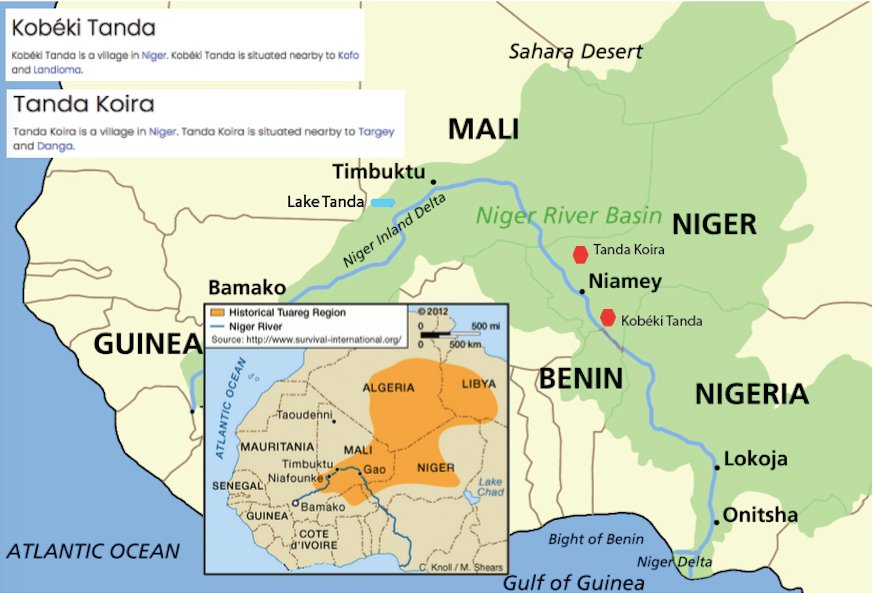
I have discovered the word “Tanda” just south of the Sahara, at the borderline of the operational area of the Tuareg tribe. Two of them are villages, the third is a lake. If the African word “Tanda” had had a different meaning than in India, there were no linguistic match with Indian Banjaras. But as they are villages at the edge of the Sahara along the Niger River,it all makes perfect sense. Tanda is a place where long distance nomadic trading communities used to halt and set up a camp. Later in the post-Nomadic age, this word changed to mean a gypsy village.
-
R1b DNA and Tandas in Africa
After discovery of Tandah at the Nile delta in Egypt, I kept on searching for more clue among the nomadic tribes westwards in North Africa. The Berbers in the Atlas Mountains in Morocco use “Tanda” for hill or camp. Likewise in the land of the Tuareg, a hill/mountain of 900 meters in Libya is named Tanda. The Fulani tribe in Niger also have hills named tandas. Their villages are named “Tondi”. All these nomads have coins in the head gears of their females, and their males have a high frequency of R1b DNA. (Gor Banjara 40 per cent). They belong to the same ancient family who came out of Egypt after being there at the time of the tribes of Israel.

-
The European and Indian DNA split of R1a
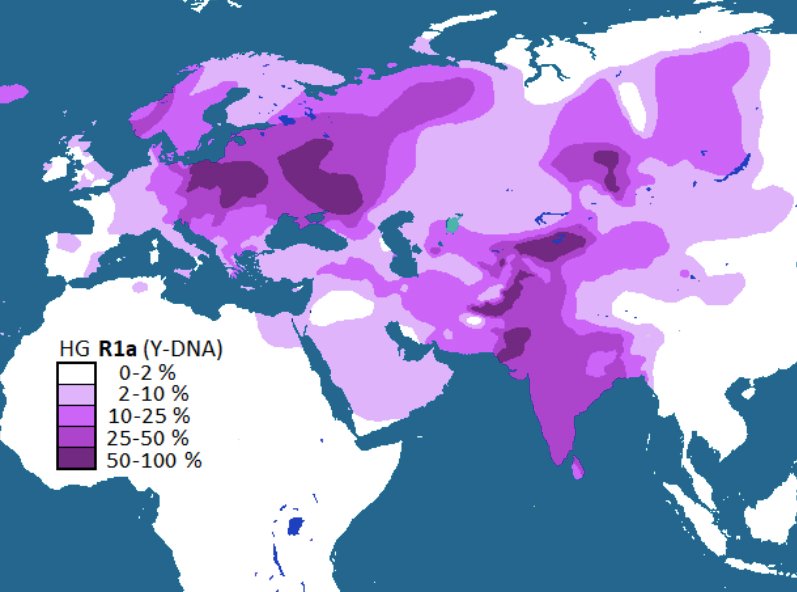
How do we know when the European R1a and Indian R1a split? The male y-chromosome follows the father-line. From father to son through all generations. When two sons depart in different directions, they will experience different traumatic events like changes in the climate, wars, torture, extreme hardships, and pandemics. Such gross experiences can and will alter a family-line’s DNA. The new born son will adapt his fathers change. Such changes or mutations have taken place with a regularity of ca. 150 years. Indians, like the Banjara’s share a mutation that their ancient European family-line lack. It is called the Indo-Persian mutation and named Z93. Before this mutation took place all Indo-Europeans shared all mutations. From Z93 onward, their mutations are different. We can roll back our DNA-chain to the time and place of the split, simply by adding mutations with the time between each mutation. DNA-science can still not tell exactly where this change of direction took place. Because people can move a lot within 150 years. The Gor Banjaras have moved a lot. As they traveled in huge caravan’s between India and Europe, through the desert and mountains of ancient Persia. Take a special look at the dark area in Northern Karnataka where the Gor Banjaras are located.

-
Gor Banjaras and their Egyptian and Western European DNA-brothers
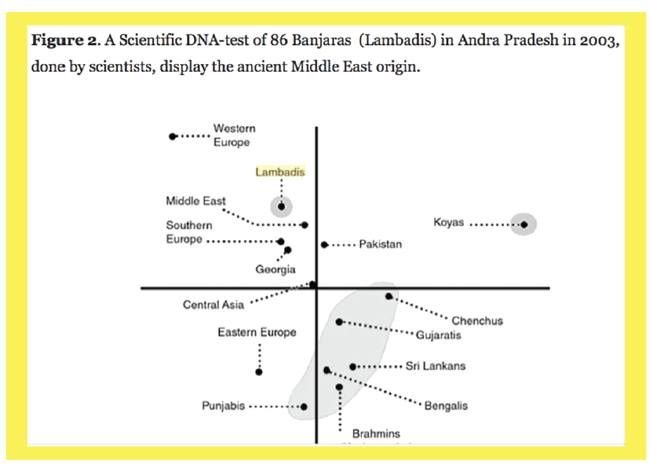
Not less than three Pharaoh’s in ancient Egypt were R1b. Irish and Scottish Celts are R1b-M269. Ca. 40 per cent of the Gor Banjaras (likewise South Indian Lambadis) share the mutation R1b-M269. Those who claim this DNA-group has its origin in India face an uphill task to defend their viewpoint. A chapter in my book: “Gypsy and daughter of Israel, Gor Banjara” is about the DNA-mix of my beloved tribe. https://banjarabook.com/


-
The DNA of Indo-Aryans, Celts and Gor Banjaras
The Indo-Aryan’s came from the west and expanded eastwards. So claims modern DNA-scientists. The split of the R1A-group into an European arm and an Indian took place ca. 3.800 B.C. That is the age of biblical Abraham, who lived in the city of Ur inside today’s Iraq. 30 per cent of Gor Banjaras are R1a. And interestingly 40 per cent are R1b. This is the DNA-code for male Celts. (The large majority of people in Ireland and Scotland are R1b). In my book “Gyspy and daughter of Israel, Gor Banjara” you can read about Celtic folklore that claims they were together with the people of Israel in Joseph’s Egypt. The Gor Banjara DNA-mix of R1a and R1b place the origin of this tribe in the Middle East. https://www.thehindu.com/…/theres…/article61986135.ece
-
The book of Queen Esther, India and Gor Banjaras
The book of Esther in the Bible (490-460 B.C) is one of the oldest written sources where India is mentioned. The people in the Indus Valley were subjects of the Achaemenid Persian empire for almost 200 years. After a cross empire «Mrs.World» contest, a Jewish girl named Hadassah became Queen Esther of Persia (…) Up till today Persian Jews have been carrying the small biblical book of Esther inside small prayer boxes/containers. The Gor Banjara tribe use strikingly similar boxes and call them «Ha-se-lo». Also the Tuareg tribe in North Africa use the same ornament. Both these nomadic tribes share the same ancient Persian dress code with coins in their females headgear. Very likely because they were doing long distance trade within the Persian empire, and could even have been subjects of this Jewish beauty queen.

-
Subscribe
Subscribed
Already have a WordPress.com account? Log in now.
 The World of the Banjara Raja