-
Alexander the Great terminated Gor´s Tanda business in 327-326 B.C
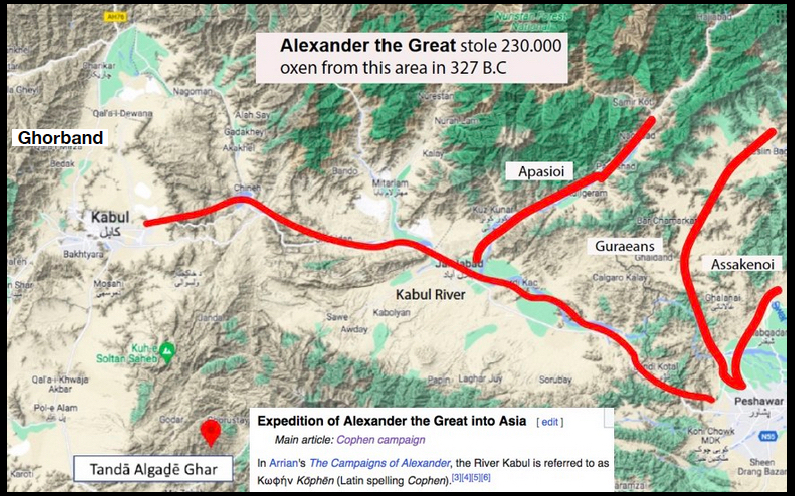
The Greek general stole 230.000 oxen in the Himalayas. And forced the tribals to help them to take them to Macedonia.
PDF will be made available for purchase.
Visit: https://exodussouth.com/
-
Tribal history according to Gor Banjara females
Its a great privilege to honor Gor Banjara females. They have preserved the ancient history of their people. I hope educated members of this tribal community will explain this glorious past to their mothers and sisters. And that my beloved people shall face a restoration. I pray they also shall be granted compensation for the horrible crimes committed against them by the British Criminal tribes Act.
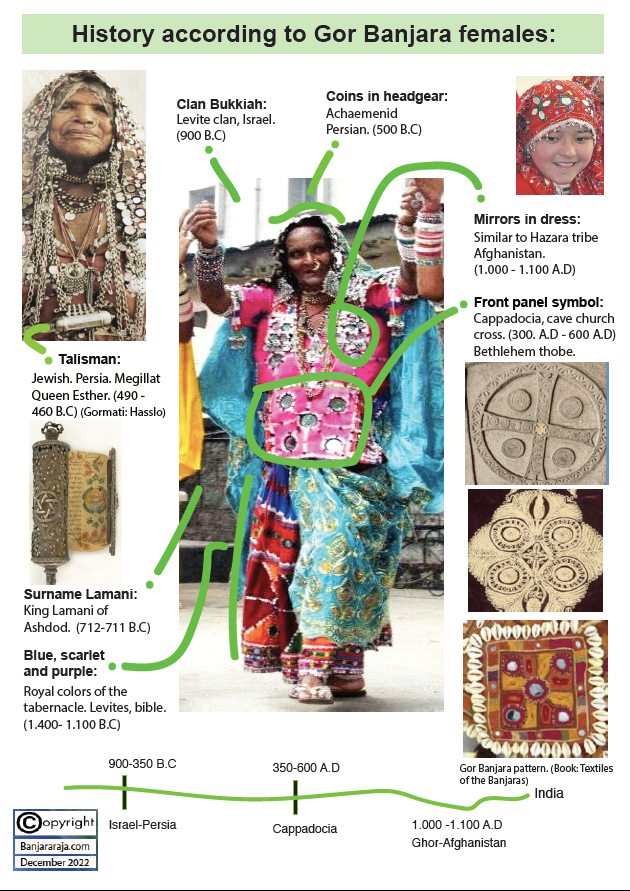
Download for free a large PDF (7,3 MB) of this chart, Illustration:
-
Levite Bukkiah match Gor Banjara clan
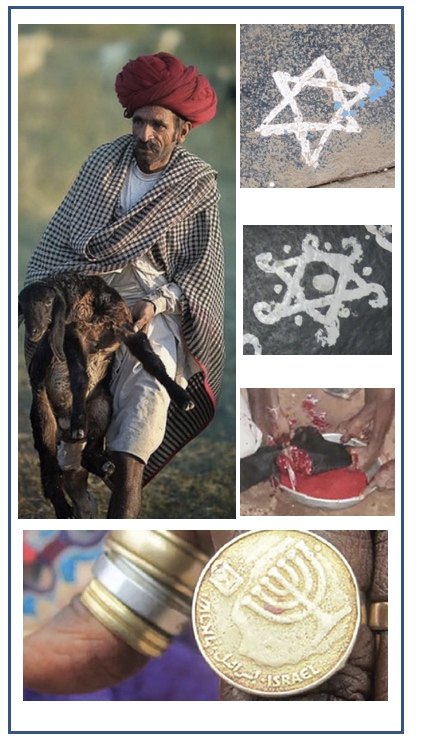
The biblical figure Bukkiah match the name of a large clan of the Gor Banjara tribe. If you do not see the big picture, simply another very strange coincidence? The Bible explains that Bukkiah was a temple musician from the Israeli tribe of Levi serving in king Solomons Temple in Jerusalem: 1 Chronicles 25:4 As for Heman, from his sons: Bukkiah, Mattaniah, Uzziel, Shubael and Jerimoth; Hananiah, Hanani, Eliathah, Giddalti and Romamti-Ezer; Joshbekashah, Mallothi, Hothir and Mahazioth. (…) Bukkiah is the great grand son of the prophet Samuel. When the Gor Banjara community acknowledge their biblical identity, this tribe will be able to preserve their Middle Eastern nomadic fingerprints. Unfortunately their unique dress code, patterns, symbols and rituals are fading away quickly in the 21st century.

-
Banjaras: Links and visits to ancient Israel
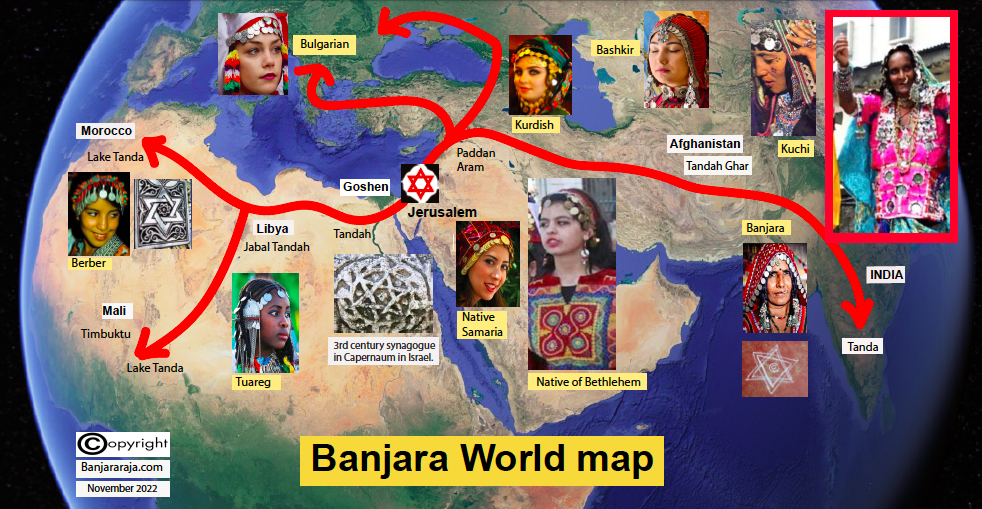
The Banjara tribe in India were nomadic long distance transporters. Their carevans could be 35-40 kilometers long, and have 100.000 bulls and bullocks. A comparative study of their females dress code, their DNA and use of judaic symbols, display a Middle Eastern origin and links to the ancient Israel and the Davidic kingdom. The Gormati (Lambadi) word “Tanda” in one of the keys to understand their trading routs, or Lamani margs. Tanda means camp, and they can be found at the edge of the Atlantic Coast in Marocco, just south of Timbuktu in Mali and along the Nile river in Egypt.
-
Bethlehem, the lost coin, Egypt and Persia
The village of Bethlehem was under Persian rule for 200 years during the age of Queen Esther who reigned ca. 485-465 B.C. How terrible it would be, if one of these Judaean Bethlehemi females had lost a coin in her headgear?
All long distant nomadic travelers between Asia and Africa would do a stopover in ancient Israel. They would have come up to Jerusalem at 750 meters above the sea level to rest for some days. There they would sacrifice a goat, lamb, or pigeon at the Temple Mount, located in the heart of the city.
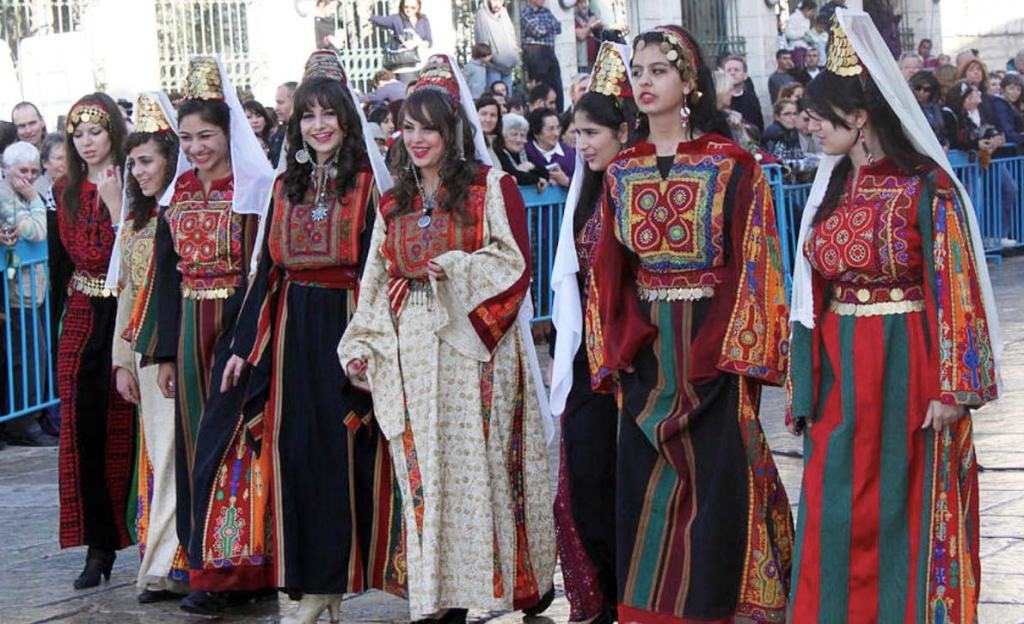
This city is claimed to be holy by around 3 billion people, or half of the Worlds population. The ancient nomads would have come in caravans using the Hebron road, connection the Sinai desert and Negev with the mountains of Israel. Hardly 12 kilometer south of Jerusalem they would travel through the small town of Bethlehem. This was the place the local shepherds (Gor Banjaras call them «Gorli-wallas») had an encounter with God of Israel. This is the town the Magi from the East, commonly understood to be astrologers from Persia, came to visit a baby boy they called the «The King of the Jews», the promised Messiah. His mother and stepfather had to flee from Bethlehem to Egypt because the King in Jerusalem wanted to kill the new born challenger to the kings authority. In the next articles I will focus on the dress code, patterns, symbols, colors, and coins of these females of Bethlehem. How can it be that nomadic tribes, across what was ancient Persia, use the same dress code? From Cush (Ethiopia) to India?
-
The Banjaras and the Indian Magi from the East
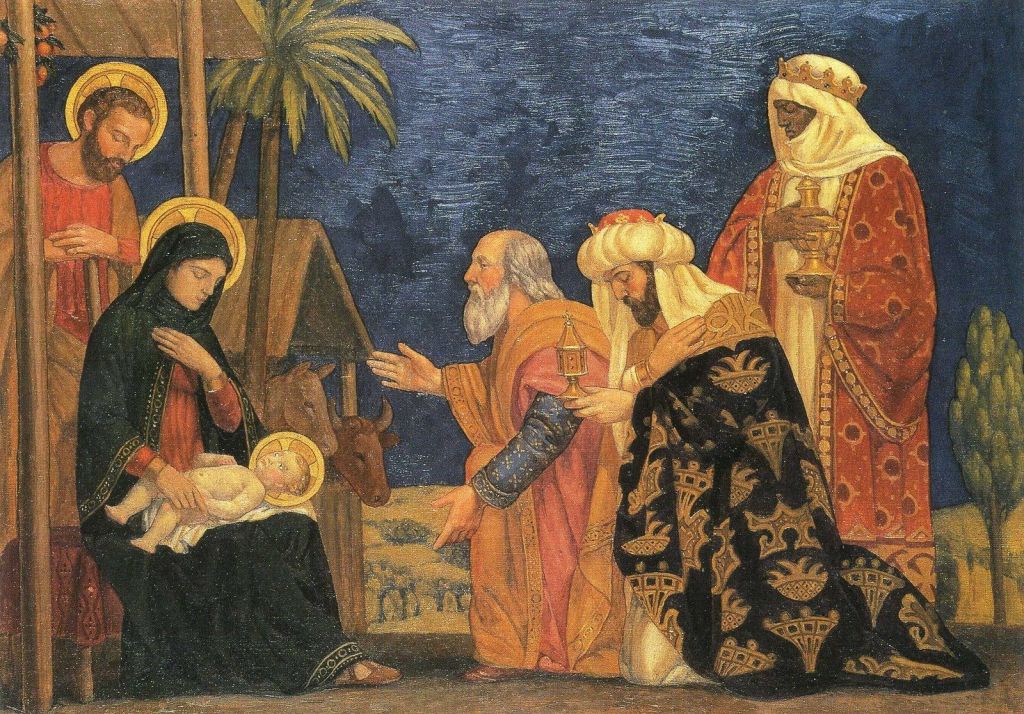
A legend from the ancient city of Taxila in the Indus Valley claims one of the three Magis who came to visit the Messiah in Bethlehem, was an Indian king. Did the king travel to Israel in a caravan set up by the Banjaras?
The match in embroidery between Bethlehem and Lambani culture is likely to be a fruit of caravan trade between India and the Middle East in ancient times. One possibility of such an encounter is found in the New Testament of the Bible. The three magi’s (wise men) or kings from the East, who came to the village of Bethlehem to worship the new born Messiah.
One Taxila and Roman Catholic (RC) legend from medieval times claim one of these Magi’s was a king from India. Since no classical written historical sources can be used to confirm such a claim, we have to apply the science of Anthropolgy. Legends and folklore can be used as valuable sources. Because such sources can include truth, that regents and their chroniclers purposely have overlooked or deleated. When we study this RC legend in details, the Macedonian general Alexander the Great is mentioned. Items that the general stole from the Middle East and Persia in 336-323 B.C on his way eastwards, were returned by the Magi’s to the new born King of the Jews. Also items that the babylonians captured from the Temple of Solomon (600 B.C).
The three magis missed the birth of the Messiah by 2 years, and did not know in which town He was going to be born. Because of Alexander’s military campaign to Persia and the Indus Valley, the Jewish Prophetic books seems to have been lost. For the next 200 years Greek culture influenced and replaced Jewish religion and customs in the East. A spectacular rediscovery took place in Bethlehem. This unique moment if time changed the way the human race calculate time. It was before the age of Christ (B.C), and after He ascended into Heaven (A.D). One and a half billion people on Earth believe in all that took place in Bethlehem according to scriptures. This is the historical base for the festival of Christmas. Females in caravans from India could have been present in this town in Judea. Not only giving the family of the Messiah the most costly gifts from Hindustan. But also returning with them back home, valuable items of Israel. Females loves silk, perfume, jewellery and embroidery.
-
Subscribe
Subscribed
Already have a WordPress.com account? Log in now.
 The World of the Banjara Raja